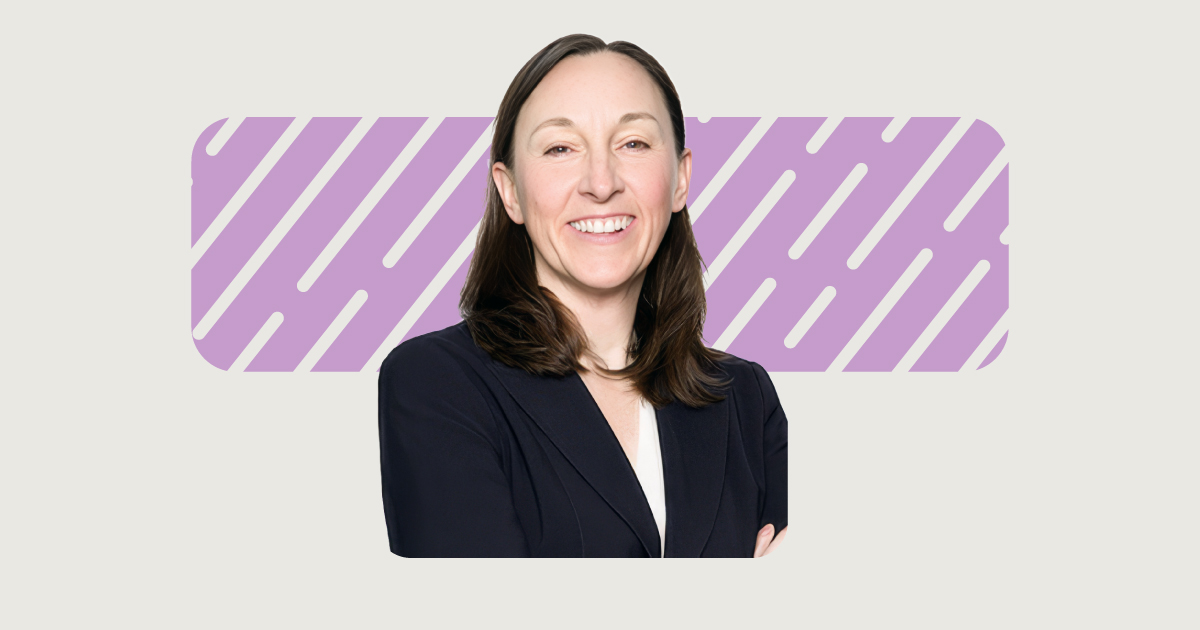
There are many people powering the work of the Canadian Centre to End Human Trafficking, including the members of our board. In this series, we’re introducing you to the people who help guide our work and sharing, in their own words, the experiences and perspectives they bring to the Centre.
Chantel Butterfield joined the Canadian Centre to End Human Trafficking’s board of directors in 2025. A survivor, advocate and leader in trauma-informed care, she brings both lived and professional experience to her work. Her commitment to supporting survivors and advancing systemic change has shaped a career dedicated to addressing exploitation and gender-based violence.
How has your personal or professional journey led you to this work?
My journey to this work has taught me that lived experience, professional expertise, and leadership do not need to exist separately. Over the years, I have had the privilege of working alongside survivors, frontline workers, community partners, and systems leaders; each perspective has deepened my understanding of human trafficking. I have seen both the incredible resilience of survivors and the gaps that allow exploitation to continue. That has deepened my passion for ensuring that our responses are compassionate, coordinated and informed by lived experience, while also addressing the conditions that make people vulnerable to exploitation.
What is one thing you wish more people understood about human trafficking?
I wish more people understood that human trafficking rarely looks like the dramatic images we often see in movies. It’s often rooted in relationships, vulnerability, inequality, coercion, and unmet needs. When we focus only on sensational stories, we risk missing the people right in front of us and oversimplifying what prevention actually requires. Ending human trafficking means talking about housing, poverty, gender-based violence, racism, colonization, belonging, and access to support.
We can’t simply become better at identifying human trafficking after it happens; we have to create communities where exploitation has fewer opportunities to take hold.
How has listening to survivor voices influenced or broadened your understanding of human trafficking?
Listening to survivors continually reminds me that there is no single human trafficking story. There can be no one-size-fits-all response.
When we listen to survivors, it challenges assumptions about what exploitation looks like, what safety means, and what healing or justice should involve. Survivors also remind us that people are more than what happened to them. Survivors bring knowledge, leadership, creativity, and solutions that systems cannot develop on their behalf. For me, meaningful survivor engagement is not simply inviting people to share their stories; it means ensuring lived expertise has a genuine influence over research, policy, programs, advocacy, and decision-making.
What gives you hope in the fight against human trafficking?
Seeing the conversation shift from simply raising awareness to building stronger, more coordinated responses gives me hope.
I see people across sectors asking better questions, listening more intentionally to survivors, and recognizing that prevention belongs to all of us. I am especially hopeful when communities move beyond working in silos and begin connecting frontline experience, research, policy, education, and advocacy.
Human trafficking is complex, but complexity doesn’t mean change is impossible.
Every time we strengthen relationships, challenge harmful conditions, or create space for survivor leadership, we are building something that makes exploitation harder and safety and belonging more possible.
Looking ahead, what excites you most about the future of the Centre?
What excites me most is the Centre’s potential to keep connecting voices and experiences that too often remain separated: survivors, frontline organizations, researchers, communities, policymakers, and decision-makers. Canada does not need more disconnected responses to trafficking; we need shared learning, strong evidence, meaningful survivor leadership, and the courage to turn what we know into action.
I am excited about the Centre’s ability to help bridge those spaces nationally while keeping the realities of people and communities at the heart of the work. That combination of lived expertise, research, advocacy, and collaboration has tremendous potential for lasting change.
We’re grateful to Chantel for sharing her perspective and for her continued contribution to the Centre’s work.
Over the coming months, we’ll continue introducing you to the people who help guide our work. Follow along as we meet more members of our board.
You also can find out more about the people guiding our work by consulting our leadership page.